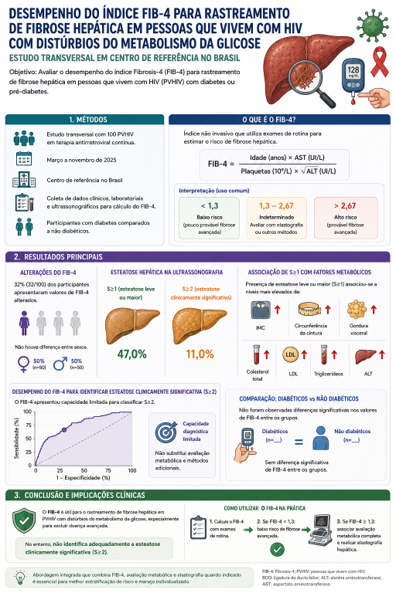
Em pessoas vivendo com HIV e distúrbios do metabolismo da glicose, o FIB-4 é útil sobretudo para excluir fibrose hepática avançada, mas sua limitada capacidade de identificar esteatose significativa reforça a necessidade de associá-lo à avaliação metabólica e à elastografia.
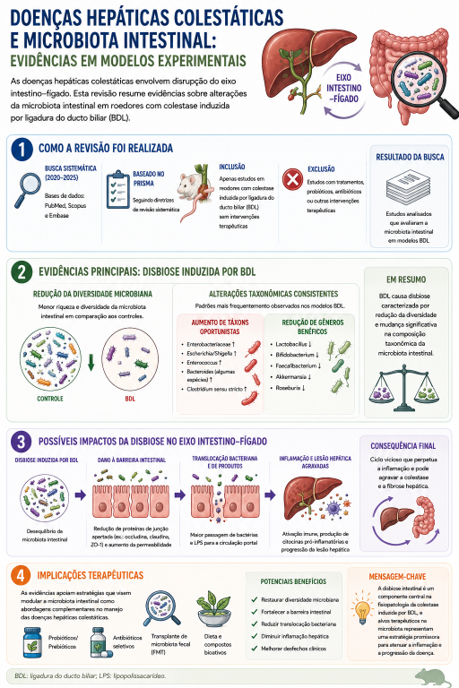
Gut microbiota alterations in rodent models of cholestasis induced by bile duct ligation: a systematic review
A colestase induzida por ligadura do ducto biliar promove disbiose intestinal, comprometimento da barreira e maior translocação bacteriana, contribuindo para a inflamação hepática e apontando a modulação da microbiota como potencial estratégia terapêutica.
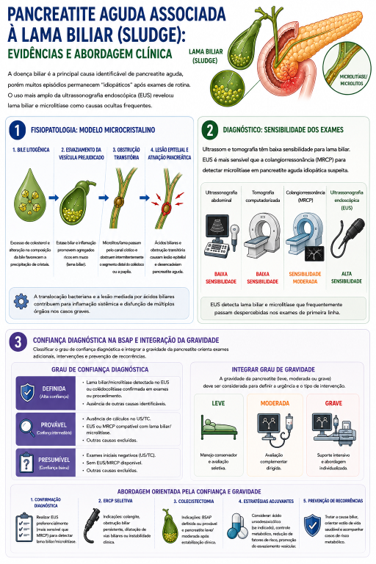
Biliary sludge–associated acute pancreatitis: clinical spectrum, diagnosis, and management
A lama biliar e a microlitíase são causas frequentemente ocultas de pancreatite aguda, e uma abordagem estruturada baseada em EUS, confiança diagnóstica e gravidade pode aprimorar o diagnóstico, orientar o tratamento e prevenir recorrências.
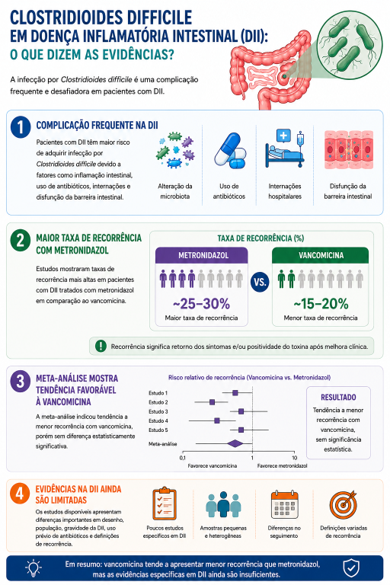
Management of Clostridioides difficile infection in inflammatory bowel disease: a systematic review and meta-analysis of antibiotic efficacy
Em pacientes com DII e infecção por Clostridioides difficile, a vancomicina apresenta tendência a menor recorrência que o metronidazol, embora as evidências disponíveis ainda sejam limitadas, heterogêneas e sem diferença estatisticamente significativa.
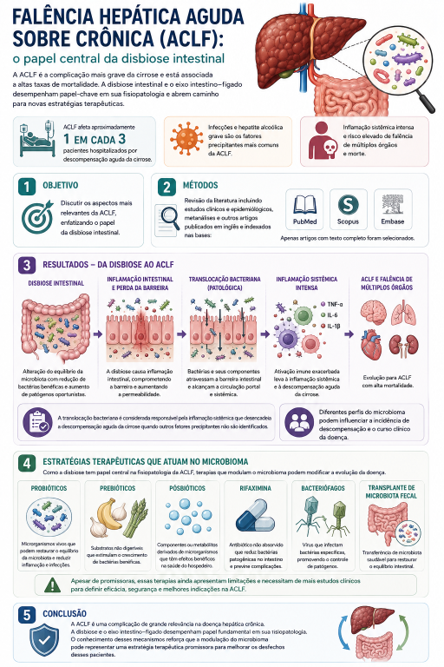
Dysbiosis in acute-on-chronic liver failure – from a pathophysiological component to a therapeutic target
A disbiose intestinal e a disfunção do eixo intestino–fígado desempenham papel central na inflamação sistêmica e na progressão da ACLF, tornando a modulação do microbioma uma estratégia terapêutica potencial, embora ainda dependente de evidências clínicas mais robustas.
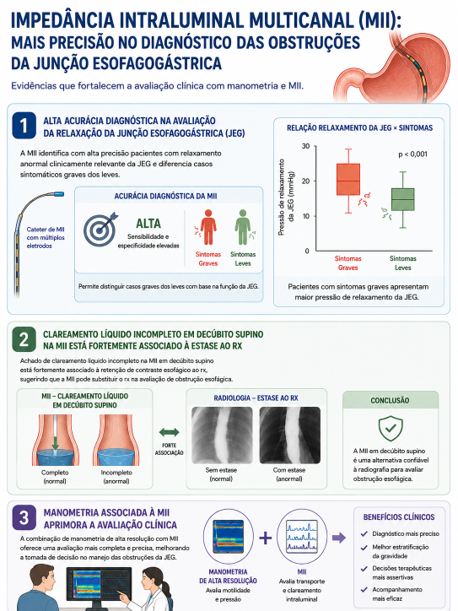
Multichannel intraluminal impedance may be useful to identify clinically relevant esophagogastric junction outflow obstruction
A MII é uma ferramenta poderosa para avaliar a função da junção esofagogástrica e o transporte esofágico, oferecendo alta acurácia diagnóstica e podendo substituir a radiografia em muitos casos. Seu uso combinado à manometria otimiza o cuidado de pacientes com suspeita de obstrução da JEG.
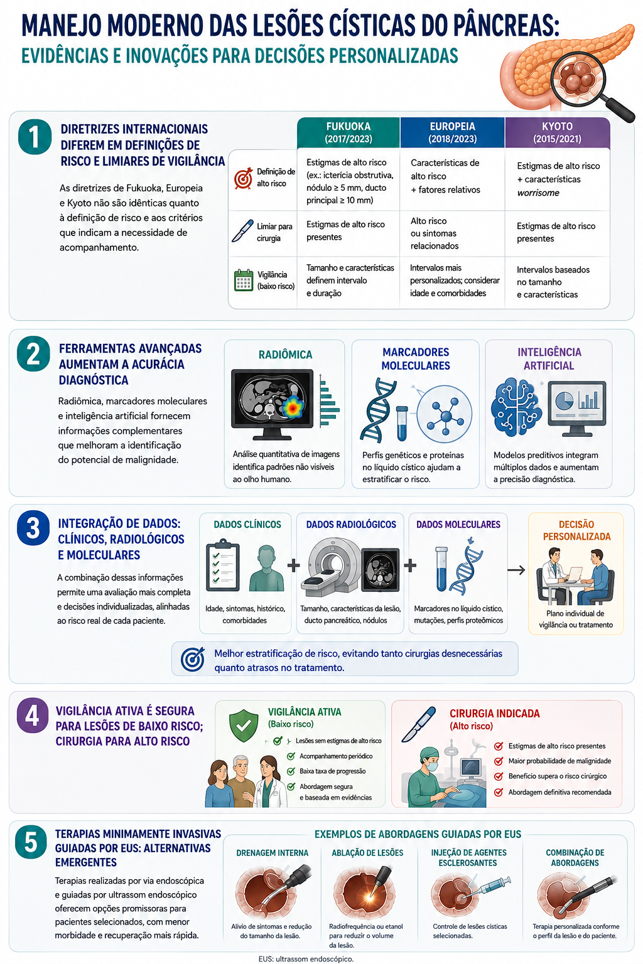
Diagnosis and management of intraductal papillary mucinous neoplasms: a narrative review based on international guidelines
O manejo moderno das lesões císticas pancreáticas deve integrar critérios clínicos, radiológicos e moleculares para individualizar a vigilância e a indicação terapêutica, incorporando novas tecnologias diagnósticas e abordagens minimamente invasivas.
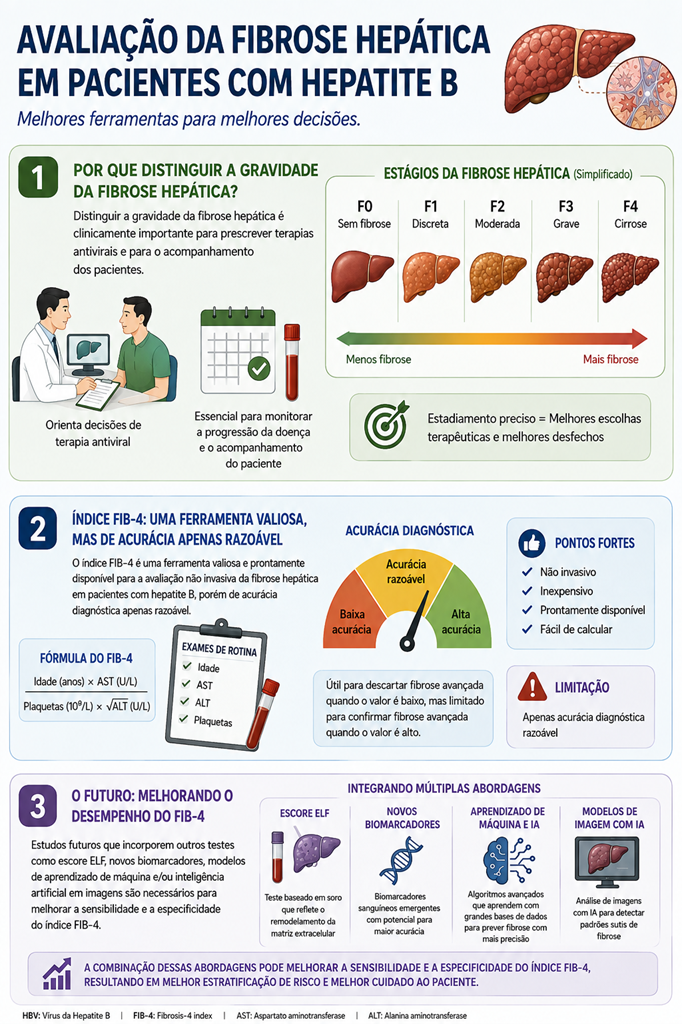
Limited diagnostic accuracy of fib-4 for detecting significant liver fibrosis in chronic hepatitis B: a cross-sectional study
O índice FIB-4 é uma ferramenta simples e acessível para avaliação não invasiva da fibrose hepática na hepatite B, mas sua acurácia limitada reforça a necessidade de associação com novos biomarcadores, escore ELF e tecnologias de inteligência artificial.
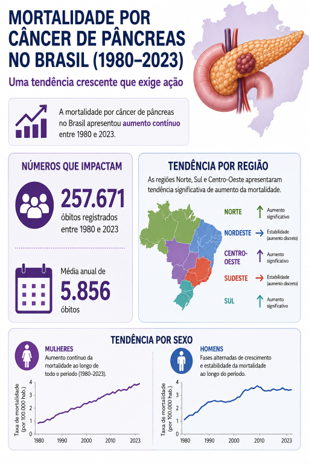
Temporal trends in pancreatic cancer mortality in Brazil between 1980 and 2023: are we aligned with the global projections?
O aumento contínuo da mortalidade por câncer de pâncreas no Brasil nas últimas quatro décadas, com diferenças regionais e entre os sexos, evidencia um problema crescente de saúde pública e reforça a necessidade de estratégias mais eficazes de prevenção, diagnóstico precoce e acesso equitativo ao tratamento.
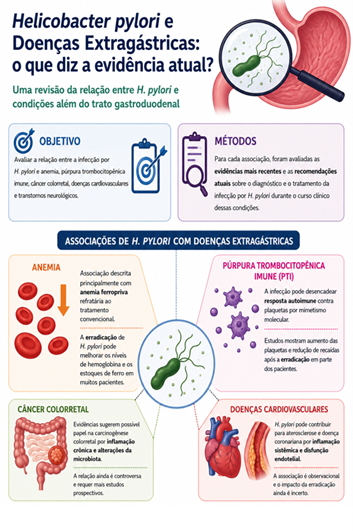
Helicobacter pylori beyond the stomach: when the story changes
As evidências atuais sugerem que a infecção por Helicobacter pylori pode estar associada a diversas manifestações extragástricas, com maior relevância clínica para anemia ferropriva e púrpura trombocitopênica imune, embora a causalidade e o benefício da erradicação em outras condições ainda necessitem de confirmação.
