
HIGHLIGHTS
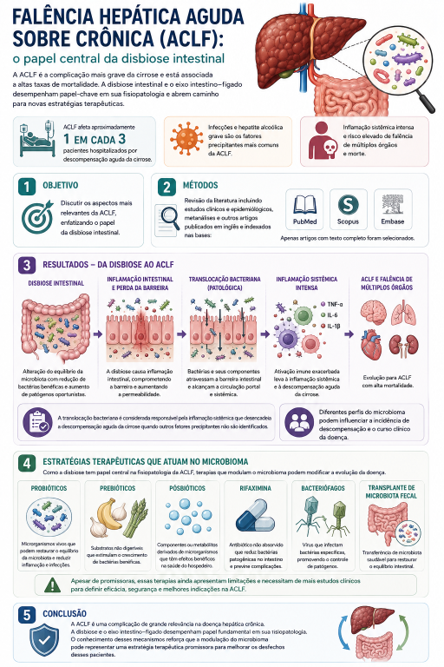
- Acute-on-chronic liver failure is the most severe form of acute decompensation of cirrhosis owing to its high mortality. It is present in more than 30% of hospitalized patients with cirrhosis, with bacterial infections being the most common precipitating factor. This article reviews the epidemiology, pathogenesis, and therapeutic alternatives for acute-on-chronic liver failure, emphasizing the role of gut dysbiosis.
ABSTRACT
Background –
Acute-on-chronic liver failure (ACLF) affects approximately one-third of patients hospitalized for acute decompensation of cirrhosis. These patients exhibit an extremely high degree of systemic inflammation, and infections as well as severe alcohol-related hepatitis are the most common precipitating factors of ACLF. Objective – This paper aims to discuss the most relevant aspects of ACLF emphasizing the role of gut dysbiosis. Methods – This review includes clinical and epidemiological studies, meta-analyses, and other articles published in English and indexed in the following databases: PubMed, Scopus, and Embase. Only full-text articles were selected. Results – ACLF is the most severe complication in patients with cirrhosis and is associated with high mortality rates. Bacterial translocation is considered responsible for the systemic inflammation leading to acute decompensation of cirrhosis when other precipitating events are not identified. Different microbiome profiles may influence the incidence of decompensation and thus the clinical course of the disease. Dysbiosis causes intestinal inflammation, which contributes to gut barrier dysfunction and pathological bacterial translocation, the main triggering factor of the cascade leading to acute decompensation of cirrhosis and multiple organ failure. Since dysbiosis plays a central role in the pathophysiology of acute decompensation of cirrhosis and ACLF, it is expected that treatments targeting the microbiome could modify the course of the disease. Despite current limitations, the role of probiotics, prebiotics, postbiotics, rifaximin, bacteriophages, and fecal microbiota transplantation is discussed in the present review. Conclusion – ACLF is a highly significant complication of liver disease. Dysbiosis and the gut–liver axis play key roles in its pathophysiology. This knowledge supports the idea that manipulation of the microbiome may be a potential therapeutic strategy.
AUTOR
Angelo A. MATTOS, Cristiane A. ALVES, Johana ACUÑA and Angelo Z. MATTOS
