
HIGHLIGHTS
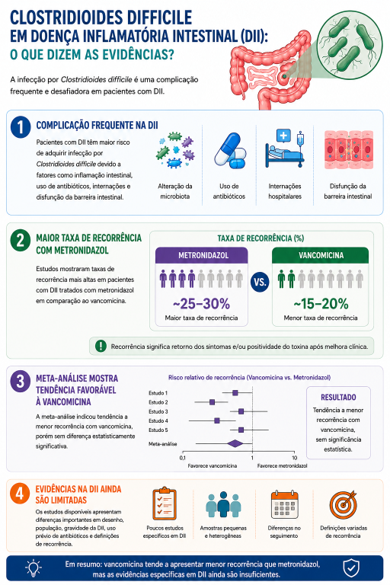
- Clostridioides difficile infection is a frequent complication in patients with inflammatory bowel disease.
- Recurrence rates were higher among patients treated with metronidazole compared with vancomycin.
- Meta-analysis showed a trend toward lower recurrence with vancomycin, although not statistically significant.
- Evidence specific to IBD remains limited and heterogeneous. • Further prospective studies are needed to guide optimal treatment strategies.
ABSTRACT
Background –
Clostridioides difficile infection (CDI) is a significant complication in patients with inflammatory bowel disease (IBD), often associated with higher recurrence rates, increased morbidity, and complex therapeutic decision-making. The optimal antibiotic regimen for CDI in IBD remains uncertain. Objective – To evaluate the efficacy of different antibiotic therapies for CDI in patients with IBD. Methods – A systematic review and meta-analysis were conducted according to PRISMA 2020 guidelines. Searches were performed in MEDLINE, EMBASE, PubMed, Epistemonikos, and the Cochrane Library through October 2024. Observational studies and clinical trials comparing antibiotic regimens in adult IBD patients with CDI were included. Data on recurrence, clinical outcomes, colectomy, and mortality were extracted. Random-effects metaanalysis was performed when appropriate. Results – Nine studies involving 643 patients met inclusion criteria. Recurrence occurred in 17.4% of patients treated with metronidazole and 8.2% of those treated with vancomycin. In the metaanalysis of four studies (n=214), vancomycin showed a trend toward lower recurrence, although not statistically significant (OR 0.55; 95%CI 0.15–1.99; P=0.36; I 2 =66%). Mortality was low and similar between groups, and colectomy occurred exclusively in patients with ulcerative colitis. Data on clinical success and adverse events were heterogeneously reported and summarized narratively. Conclusion – Vancomycin may be associated with lower recurrence in higher-risk IBD patients; however, available evidence remains limited and heterogeneous. Treatment decisions should be individualized, and further prospective, IBD-specific studies are needed to clarify optimal management strategies.
AUTOR
Isadora Brandão PELUCIO, Carla MALAGUTI, Túlio Medina Dutra de OLIVEIRA, Karoline Maria de Souza Marques CHITARRA, Maria Cristina Vasconcellos FURTADO, Júlio Maria Fonseca CHEBLI
