
HIGHLIGHTS
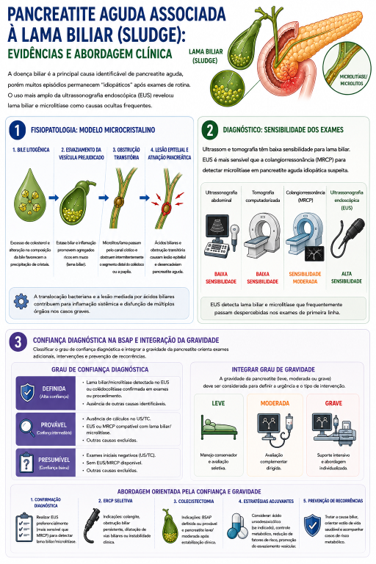
- Biliary sludge and microlithiasis are frequent, under-recognized causes of “idiopathic” acute pancreatitis.
- EUS is more sensitive than MRCP for detecting microlithiasis and can improve diagnostic confidence in suspected BSAP.
- Integrating diagnostic confidence with Revised Atlanta severity helps tailor ERCP, cholecystectomy timing, and duct clearance strategies.
ABSTRACT
Background –
Biliary disease is the leading identifiable cause of acute pancreatitis, yet many attacks remain “idiopathic” after routine tests. Wider use of endoscopic ultrasonography (EUS) has revealed biliary sludge and microlithiasis as frequent, previously occult causes of pancreatitis. Objective – To summarise current evidence on the pathophysiology, diagnosis and management of biliary sludge–associated acute pancreatitis (BSAP) and propose a simple clinical framework. Methods – Narrative review of experimental and clinical studies, practice guidelines and consensus statements identified through targeted searches of PubMed, Embase and the Cochrane Library, complemented by citation tracking of key articles. Results – Available data support a microcrystaldriven model in which lithogenic bile, impaired gallbladder emptying and mucin-rich aggregates promote sludge formation, while transient obstruction and bile acid–mediated epithelial injury in the distal bile ductpapillary outflow segment trigger pancreatitis. First-line ultrasonography and computed tomography have low sensitivity for sludge, whereas EUS is more sensitive than magnetic resonance cholangiopancreatography for detecting microlithiasis in suspected idiopathic acute pancreatitis. Grading diagnostic confidence (definite, probable or presumptive BSAP) and integrating disease severity can rationalise use of MRCP/EUS, selective ERCP, cholecystectomy and adjunctive medical or metabolic strategies. Conclusion – BSAP is a clinically relevant entity within the biliary pancreatitis spectrum. Applying a structured, confidence- and severity-based approach may help standardise investigations, optimise timing of ERCP and cholecystectomy and reduce preventable recurrences.
AUTOR
Mingqi SU, Yayun XIE and Ji CHEN
