
HIGHLIGHTS
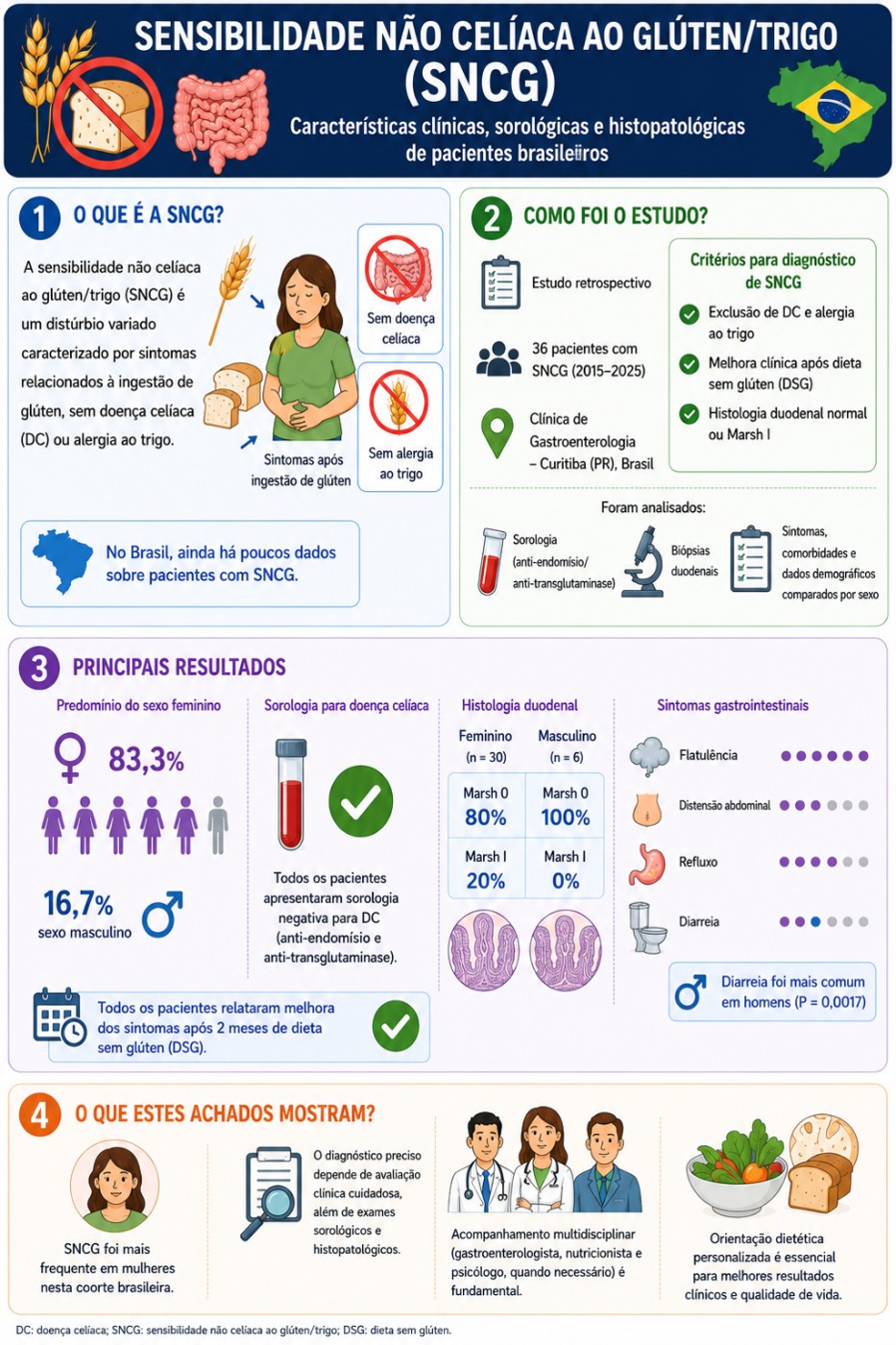
- Non-celiac gluten/wheat sensitivity (NCGWS) was more prevalent in women, although clinical presentation did not differ between sexes.
- Histological analysis (Marsh 0 or I) and negative CD serology were key to excluding celiac disease in all patients.
- A gluten-free diet led to symptom improvement in all cases, confirming the clinical diagnosis of NCGWS.
ABSTRACT
Background –
Non-celiac gluten/wheat sensitivity (NCGWS) is a varied disorder characterized by symptoms related to gluten intake, without celiac disease (CD) or wheat allergy. In Brazil, data on patients with NCGWS remain limited. Objectives: To describe the clinical, serological, and histopathological features of Brazilian patients diagnosed with NCGWS and to compare findings between sexes. Methods – A retrospective study was conducted using medical records of 36 patients diagnosed with NCGWS between 2015 and 2025 at a gastroenterology clinic in Curitiba, Brazil. Diagnosis was based on excluding CD and wheat allergy, clinical improvement after a gluten-free diet (GFD), and normal or Marsh I duodenal histology. Serology (anti-endomysium/anti-transglutaminase antibodies) and duodenal biopsies were analyzed. Symptoms, comorbidities, and demographic data were compared by sex. Results – Most patients were women (83.3%). All had negative CD serology. Duodenal biopsies showed Marsh 0 (80% of females, 100% of males) or Marsh I changes. Gastrointestinal symptoms included flatulence, abdominal distension, and reflux; diarrhea was more common in males (P=0.0017). All patients reported symptom improvement after two months on a GFD. Conclusion – In this Brazilian cohort, NCGWS was more frequent in women. Accurate diagnosis relies on histological, serological, and especially thorough clinical evaluation. Multidisciplinary follow-up and personalized dietary guidance are vital for optimal patient outcomes.
AUTORES
Lorete Maria da Silva KOTZE, Luiz Roberto KOTZE, Eloisa Medeiros NISIHARA and Renato NISIHARA
