
HIGHLIGHTS
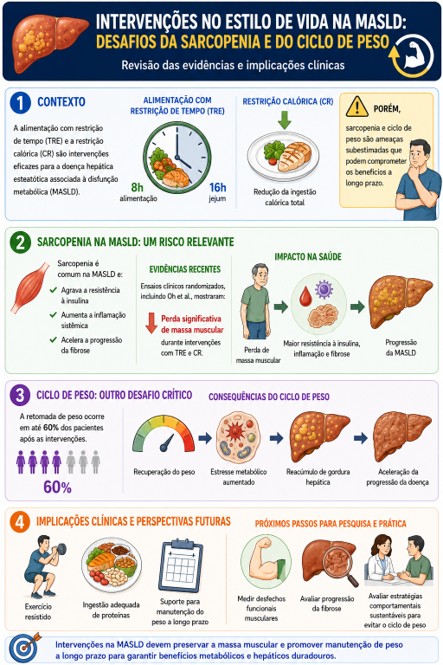
- TRE and CR yield comparable reductions in hepatic fat, body weight, and visceral adiposity in MASLD.
- Both strategies can lead to skeletal muscle loss, increasing the risk of sarcopenia.
- Weight regain after interventions is common and may aggravate steatosis and fibrosis progression.
- Sustainable MASLD care requires resistance exercise, adequate protein intake, and monitoring of muscle mass and function.
ABSTRACT
Background –
Objective – Time-restricted eating (TRE) and calorie restriction (CR) are effective lifestyle interventions for metabolic dysfunction-associated steatotic liver disease (MASLD). However, sarcopenia and weight cycling remain underappreciated threats that may offset their long-term benefits. This short communication reviews current evidence and clinical implications of these challenges. Methods – Sarcopenia, prevalent in MASLD, aggravates insulin resistance, systemic inflammation, and fibrosis progression. Recent randomized controlled trials, including Oh et al., reported significant muscle mass loss during TRE and CR interventions. Additionally, weight regain, affecting up to 60% of patients post-intervention, induces metabolic stress, promotes hepatic fat re-accumulation, and may accelerate disease progression. Conclusion – MASLD interventions should integrate muscle-preserving strategies–resistance exercise, adequate protein intake–and long-term weight maintenance support. Future trials must measure functional muscle outcomes, assess fibrosis progression, and evaluate sustainable behavioral strategies to prevent weight cycling.
AUTORES
Yusuf Bünyamin KETENCİ, Hakan DEMİRÖZ and Mehmet AKCA
