
HIGHLIGHTS
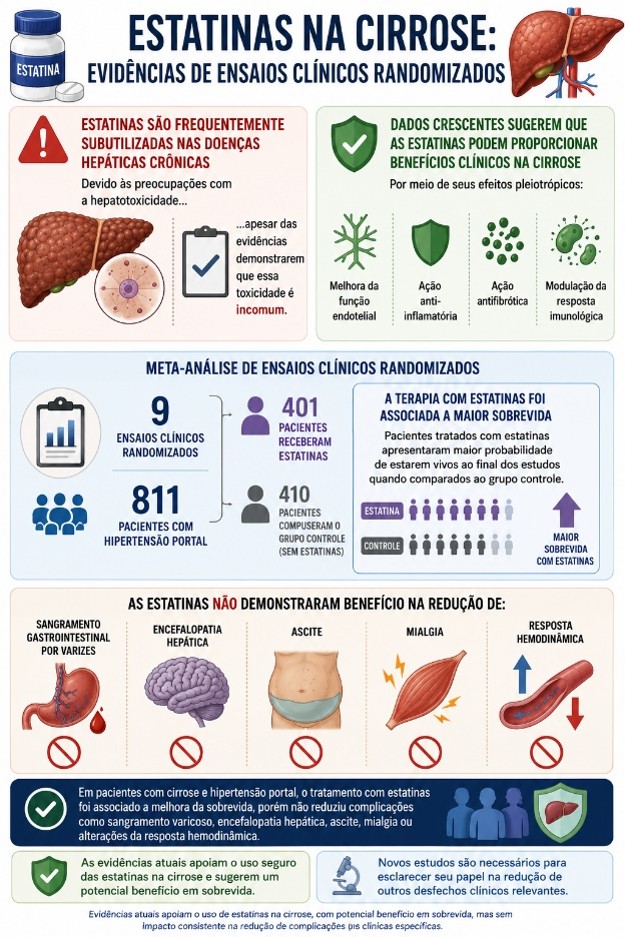
- Statins are often underused in chronic liver disease due to concerns about hepatotoxicity, despite evidence showing such toxicity is uncommon.
- Growing data suggest statins may provide clinical benefits in cirrhosis through pleiotropic effects.
- This meta-analysis included 9 randomized clinical trials with 811 patients with portal hypertension (401 receiving statins). Statin therapy was associated with more patients alive at the end of the trials compared to the control group.
- Statins did not show benefit in reducing variceal gastrointestinal bleeding, hepatic encephalopathy, ascites, myalgia, or hemodynamic response.
ABSTRACT
Background –
Physicians often use caution when prescribing statins to patients with chronic liver disease (CLD) due to potential hepatotoxicity. However, recent evidence indicates that hepatotoxicity is uncommon, and the risks of not using statins may often outweigh those associated with their use. Additionally, recent findings suggest that statins may have clinically beneficial effects on cirrhosis due to their pleiotropic properties. Objective – To evaluate the impact of statin use on the number of patients with chronic liver disease alive at the end of the trials and to assess its effects on portal hypertension, ascites, hepatic encephalopathy, variceal hemorrhage, and hepatocellular carcinoma. Methods – This meta-analysis analyzed 9 randomized clinical trials published in the MEDLINE, EMBASE, and SCOPUS databases that evaluated the use of statins in patients with cirrhosis. These studies included a total of 811 subjects with portal hypertension, of which 401 patients were in the intervention group. We assessed risk of bias using the Risk of Bias 2 (RoB 2) tool for randomized clinical trials, and we analyzed the quality of evidence using the GRADE (Grading of Recommendations Assessment, Development, and Evaluation) scale. We extracted data on the number of events and the total number of patients to perform a meta-analysis of proportions using the R software with the “meta” package (version 4.9-6). Results – Our meta-analysis on patients alive at the end of the trials included 5 studies, involving a total of 718 patients (352 in the statin group and 366 in the control group). From these, 618 patients were alive at the end of the studies, with 301 from the intervention group and 287 from the control group. The overall odds ratio (OR) between the groups was 1.79 (95%CI -1.04 to 3.06; I²: 20.3%), favoring the use of statins. The results for variceal gastrointestinal bleeding showed an OR of 0.67 (95%CI, 0.41 to 1.09; I²: 0%); for hemodynamic response, the OR was 2.41 (95%CI, 0.65 to 8.92; I²: 66%); for hepatic encephalopathy, the OR was 0.41 (95%CI, 0.06 to 2.77; I²: 61%); for myalgia, an OR of 0.74 (95%CI, 0.22 to 2.46; I²: 1%); and for ascites, the OR was 0.84 (95%CI, 0.48 to 1.48; I²: 0%). Conclusion – The use of statins is associated with a greater number of patients with hepatic cirrhosis alive at the end of the trials. However, we were unable to determine the reason for this potential beneficial effect.
AUTORES
Mariana Oliveira Amarante MORENO, Cláudio Luiz da Silva Lima PAZ, Mariana Alves Nascimento RODRIGUES, Antonio Carlos Dias ANDRADE, Maria Gabriela Fernandes DEZAN, Lourianne Nascimento CAVALCANTE and André Castro LYRA
