
HIGHLIGHTS
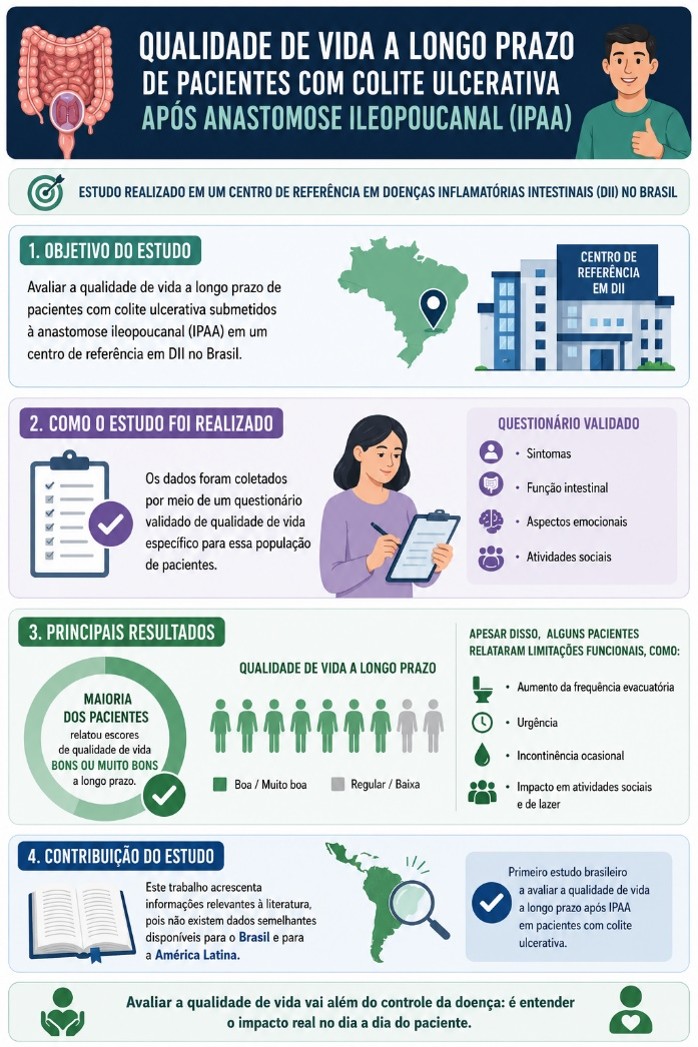
- The study assessed the long-term quality of life of patients with ulcerative colitis after ileal pouchanal anastomosis in a Brazilian IBD referral center.
- Data were collected using a validated quality of life questionnaire specific to this patient population.
- The results showed that most patients reported good quality of life scores in the long term, despite some functional limitations.
- This work adds relevant information to the literature, as no similar data exist for Brazil and Latin America.
ABSTRACT
Background –
Reports on the long-term impact on quality of life (QoL) after ileal pouch-anal anastomosis (IPAA) for ulcerative colitis (UC) are scarce in Latin America. Objective – To evaluate QoL after IPAA in an inflammatory bowel disease (IBD) referral center in Brazil. Methods – From March 2023 to August 2023, a standardized questionnaire was administered to patients with UC who had previously undergone IPAA surgery. The questionnaire addressed: (1) daily bowel movement frequency, (2) daytime and nighttime fecal incontinence, (3) need for daily medication such as loperamide, (4) fecal urgency, (5) social limitations, (6) fatigue, (7) impact on sexual life, (8) use of diapers, and (9) impact on work ability. Results – In total, 28 patients completed the questionnaire. Most patients were female (19, 67.9%), with a mean age of 44.8±10.2 years and an average follow-up time of 13.8 years. Patients reported an average of 6.0±1.8 bowel movements per day, with 27 (96.4%) experiencing diarrhea. Diaper use was generally unnecessary (22, 78.6%). Most patients had nocturnal bowel movements (24, 85.7%) and fecal urgency (17, 60.7%). Antidiarrheal medication (loperamide) was required by 21 patients (75%) to reduce bowel movement frequency. Despite high satisfaction levels with IPAA (22, 78.6%), patients reported negative impacts on bowel habits and several QoL domains, including fatigue (27, 96.4%), sexual life (18, 64.3%), social and work activities (22, 78.6%), and feelings of shame (21, 75%). However, dietary restrictions were minimal (17, 60.7%). Conclusion – Although long-term satisfaction with IPAA is high, patients experience significant negative impacts on bowel habits and QoL. These findings underscore the need for targeted strategies to improve outcomes and support for future IPAA patients.
AUTORES
Israel Geraldo SILVA, Sandro da Costa FERREIRA, Omar FÉRES, Marley Ribeiro FEITOSA, José Joaquim Ribeiro da ROCHA and Rogério Serafim PARRA
