
HIGHLIGHTS
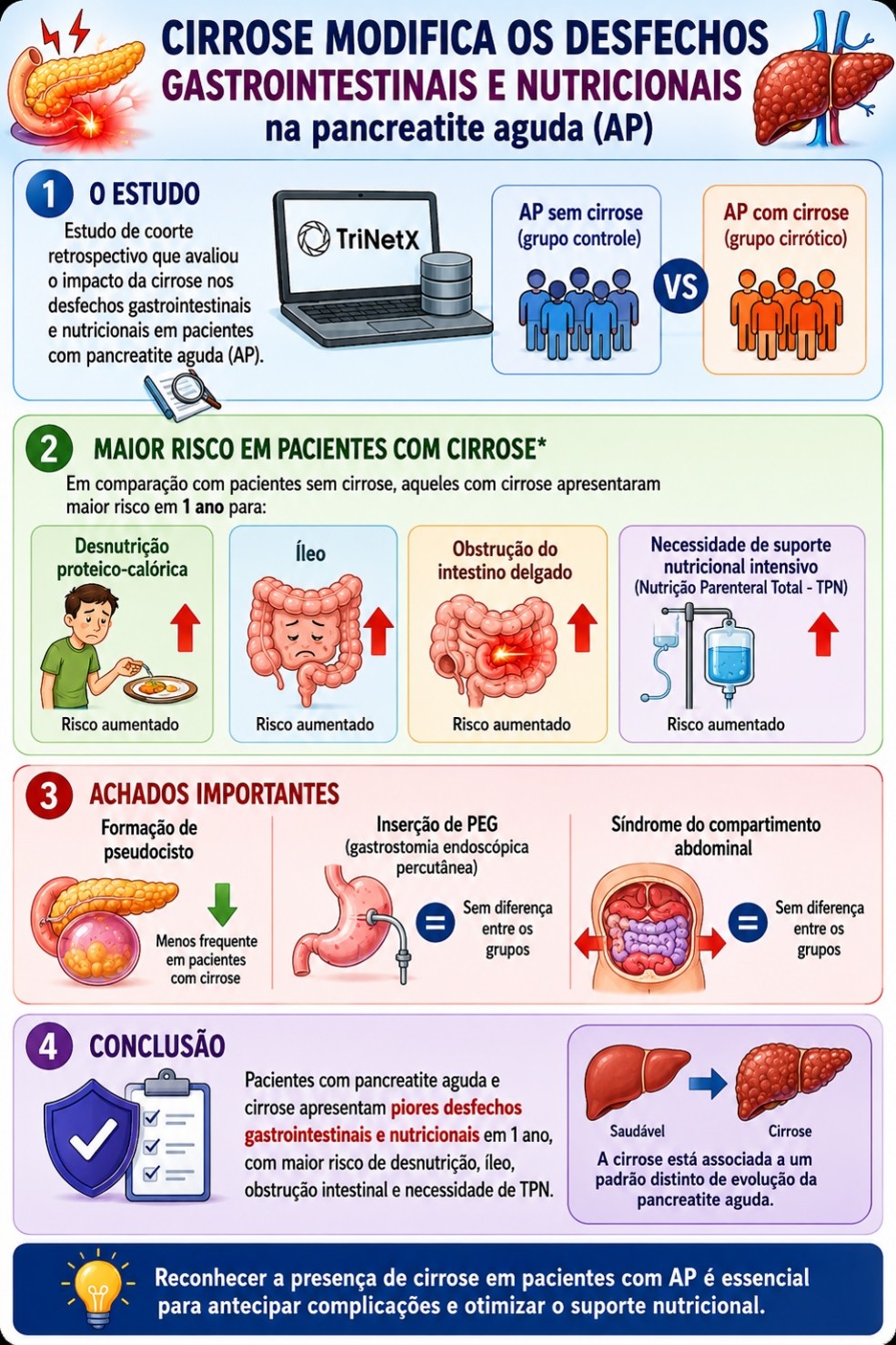
- This retrospective cohort study evaluated the impact of cirrhosis on 1-year gastrointestinal and nutritional outcomes in patients with acute pancreatitis (AP) using the TriNetX database.
- Compared with non-cirrhotic AP patients, those with cirrhosis had significantly higher risks of proteincalorie malnutrition, ileus, small bowel obstruction, and need for intensive nutritional support, including total parenteral nutrition (TPN).
- Pseudocyst formation was less frequent in cirrhotic AP patients, while rates of PEG insertion and abdominal compartment syndrome were similar, suggesting a distinct pattern of disease evolution in the setting of cirrhosis.
ABSTRACT
Background –
Cirrhosis and acute pancreatitis (AP) are significant causes of morbidity and mortality, and their coexistence magnifies the risk of systemic complications. Patients with both conditions are particularly vulnerable to adverse outcomes, including gastrointestinal and nutritional challenges. This study examines the impact of cirrhosis on 1-year outcomes in AP patients, focusing on pseudocyst formation, protein-calorie malnutrition, ileus, small bowel obstruction, and the need for nutritional interventions such as total parenteral nutrition (TPN) or percutaneous endoscopic gastrostomy (PEG). Methods – A retrospective cohort analysis was conducted using TriNetX database. Patients with AP were identified and divided into two cohorts: those with cirrhosis (Cohort 1) and those without cirrhosis (Cohort 2). Propensity score matching balanced baseline characteristics, resulting in 26,160 patients in each cohort. Outcomes were tracked over one year, including pseudocyst formation, ileus, small bowel obstruction, malnutrition, and nutritional interventions. Kaplan-Meier survival estimates and hazard ratios with 95% confidence intervals assessed risk differences between cohorts. Results – Cirrhosis significantly worsened outcomes compared to non-cirrhosis. Protein-calorie malnutrition was twice as common (P<0,001), affecting 5.2% of cirrhotic patients versus 2.6% of non-cirrhotic patients. Risks for ileus (P<0,001) and small bowel obstruction (P<0,001) were also significantly higher, with incidences of 2.7% and 1.7%, respectively, in cirrhotic patients. The need for TPN was more frequent in the cirrhosis cohort (P<0,001), affecting 1.9% compared to 1.2%. Conversely, pseudocyst formation was less frequent in cirrhotic patients (P=0,018), with an incidence of 2.3% versus 2.8%. PEG insertion and abdominal compartment syndrome showed no significant differences. Conclusion – Cirrhosis amplifies the risk of nutritional deficiencies, ileus, and small bowel obstruction in AP patients, emphasizing the need for proactive, multidisciplinary management strategies for this high-risk population. The reduced incidence of pseudocyst formation may reflect altered disease progression in cirrhosis.
AUTORES
Chidera N ONWUZO, Kikunlore Elijah ODUNSANYA, FNU ALVINA, Rashid Abdel RAZEQ, Kojo-Frimpong B. AWUAH, Somtochukwu ONWUZO
