
HIGHLIGHTS
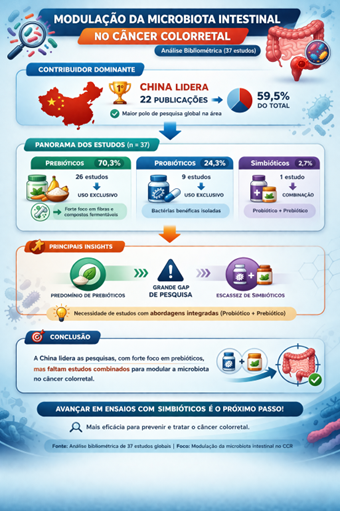
- Dominant Contributor: China leads the field of research on gut microbiota modulation and colorectal cancer, contributing 22 publications, which constitute 59.5% of the total dataset.
- Prebiotic Focus: A substantial majority of the studies, 26 out of 37 (70.3%), emphasise the exclusive use of prebiotics for modulating gut microbiota.
- Probiotic Utilisation: Nine studies (24.3%) were dedicated solely to the application of probiotics, highlighting their role in gut health.
- Limited Synbiotic Research: A mere 1 study (2.7%) investigated a synbiotic approach, indicating a gap in research combining both probiotics and prebiotics.
- Overall Research Trends: The analysis reveals a significant emphasis on prebiotics over probiotics, underscoring the need for further investigation into integrated approaches for gut microbiota modulation in colorectal cancer. These highlights succinctly capture key insights from the bibliometric analysis and underscore the current research landscape in this area.
ABSTRACT
Background – Objectiv
This study is a bibliometric analysis of scientific publications reporting the beneficial effects of gut microbiota modulation by probiotics and/or prebiotics on colorectal cancer. Methods – This study adhered to the PRISMA guidelines and focused on English peer-reviewed research articles published between 2020 and 2025, as indexed in Google Scholar and PubMed. Search terms included “Colorectal Cancer”, “Colon Cancer”, “Colorectal Carcinoma”, “Colon Carcinoma” and “Gut Microbiota”. A total of 116 studies were selected and manually reviewed, taking into account the inclusion and exclusion criteria. Results – The bibliometric analysis of 37 studies revealed that China leads research efforts, primarily focusing on prebiotics (70.3%), such as dietary fibres, while probiotic-focused studies are limited (24.3%) due to practical challenges. Although the combined use of prebiotics and probiotics (2.7%) is theoretically beneficial, their practical application remains complicated. The trend in the literature aligns with a growing interest in traditional medicine and functional foods, but annual publication rates have declined, with only three papers from 2025 (30.8%). Despite recognising microbial diversity, the number of probiotic-based studies is low, with Clostridium butyricum being the most prevalent species. Conclusion – Overall, this analysis underscores the critical role of gut microbiota in CRC treatment and the potential of natural compounds, while highlighting the need for further research. Further research is essential to deepen our understanding of gut microbiota dynamics and optimise therapeutic approaches for patients with CRC.
AUTORES
Elisha Apatewen AKANBONG, Ali ŞENOL, Özkan DURU, Erva ESER, Haceli ÖCAL and Miyase ÇINAR
