
HIGHLIGHTS
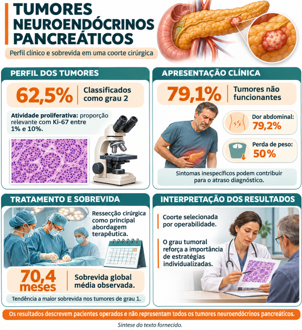
- Most resected pancreatic neuroendocrine tumors (PNETs) were classified as grade 2 (62.5%), with a significant proportion of cases demonstrating intermediate proliferative activity (Ki-67 index 1–10%). This reflects a surgical cohort selected for operability and emphasizes the need for tailored management strategies in this tumor grade range.
- Most tumors were nonfunctioning (79.1%) and presented with nonspecific symptoms such as abdominal pain (79.2%) and weight loss (50%). These clinical features contributed to diagnostic delays and highlight the insidious nature of PNETs compared to more symptomatic functioning variants.
- Surgical resection remained the primary therapeutic approach, with a mean overall survival of 70.4 months. There was a trend toward longer survival in patients with grade 1 tumors, underscoring the prognostic significance of tumor grade.
ABSTRACT
Background –Pancreatic neuroendocrine tumors (PNETs) are rare neoplasms of the digestive system, with variable prognoses and biological behaviors. Surgical resection remains the mainstay of treatment. Objective – To evaluate the clinicopathological characteristics and surgical outcomes of patients with PNETs who underwent resection at the Hospital de Clínicas, UNICAMP. Methods – This is a retrospective cohort study including 24 patients who underwent surgical resection between 2013 and 2023. Clinical, demographic, histopathological, and survival data were analyzed. The primary outcome was overall survival. Results – The mean age was 53.9 ± 14.4 years, with a predominance of female patients (66.7%). Most tumors were nonfunctioning (79.1%), with abdominal pain (79.2%) and weight loss (50%) being the most common symptoms. The surgical procedures performed were distal pancreatectomy (54.2%), pancreaticoduodenectomy (41.6%), and enucleation (4.2%). Histological classification revealed 62.5% grade 2 tumors, 33.3% grade 1, and 4.2% MiNEN. Mean overall survival was 70.4 ± 58 months. There was a trend toward longer survival in grade 1 tumors (98 ± 68.1 months) compared to grade 2 (59.1 ± 49.5 months; P=0.06). Postoperative mortality was 8.3%, associated with pancreaticoduodenectomy. Conclusion – Histological grading remains a key prognostic factor in PNETs. Surgical resection remains the cornerstone of treatment. Multicenter studies are necessary to validate these findings on a larger scale.
AUTORES
Mariana Martins Sanches FERREIRA, Philipe Franco do Amaral TAFNER, Martinho Antonio GESTIC, Murillo Pimentel UTRINI, Francisco CALLEJAS-NETO and Everton CAZZO
