
HIGHLIGHTS
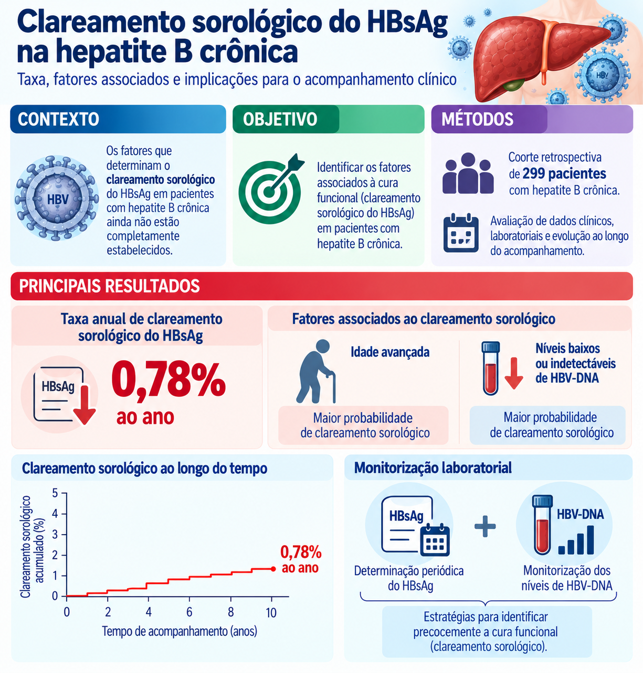
- The factors that determine HBsAg seroclearance in patients with chronic hepatitis B are not yet fully established.
- A retrospective cohort study of 299 patients with chronic hepatitis B sought to identify factors associated with functional cure.
- The annual HBsAg clearance rate was 0.78% and was correlated with advanced age and low or undetectable HBV-DNA levels.
- Periodic HBsAg determination and monitoring of HBV-DNA levels are strategies for detecting functional cure.
ABSTRACT
Background –
Chronic hepatitis B virus (HBV) infection represents a major public health problem due to its high morbidity and mortality associated with liver cirrhosis and hepatocellular carcinoma. Functional cure, characterized by serological clearance of the HBV surface antigen (HBsAg), is the main therapeutic goal, since sterilizing viral eradication is not yet feasible. HBsAg clearance rates vary widely in the literature, and
understanding the factors associated with this event is crucial for optimizing patient management. Objective – To investigate the HBsAg clearance rate and identify the demographic, clinical, and virological factors associated with this event in a cohort of patients with chronic hepatites B virus infection followed up at a reference center in Northeast Brazil. Methods – A retrospective cohort study was conducted through a review
of the medical records of patients with chronic hepatitis B virus infection treated at a Hepatology Service in Northeast Brazil between January 2015 and October 2025. Clinical, demographic and laboratory variables were analyzed. Statistical analysis used tests such as Mann-Whitney for quantitative variables and Fisher’s exact test for categorical variables, in addition to the construction of Kaplan-Meier curves with the Log-Rank test to evaluate
HBsAg clearance. The significance level was set at P<0.05. Results – Of the 600 medical records screened, 299 patients were included in the analysis, 63.2% of whom were women, with a median age of 45 years. During a mean follow-up period of 5.14 years, totaling 1,538 person-years, 12 patients (4%) achieved serological clearance of HBsAg, resulting in an annual rate of 0.78%. Statistical analysis revealed significant associations between HBsAg clearance and advanced age (P=0.008) and lower HBV-DNA levels (P=0.0156). Conclusion – The annual rate of HBsAg serological clearance in this cohort was 0.78%. Advanced age and low viral load levels were significantly associated with functional cure. These findings enrich the knowledge about the natural history of chronic hepatitis B in the region and reaffirm the importance of viral suppression in disease control.
AUTOR
Ana Gabriella Gonçalves AMORIM, Alessandra Porto de Macedo COSTA
