
HIGHLIGHTS
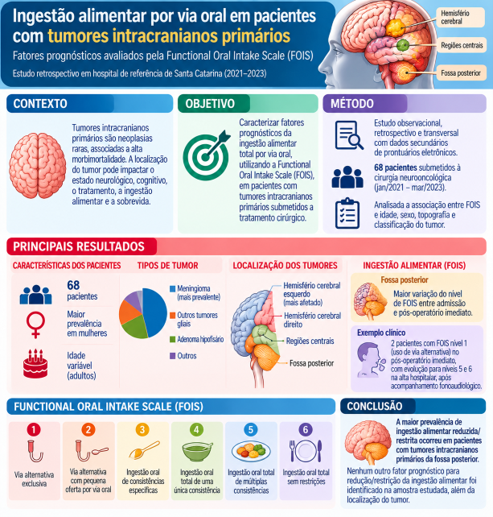
- Evaluated prognostic factors for oral intake using FOIS in neurosurgical patients with primary intracranial tumors.
- Conducted a retrospective crosssectional study of 68 medical records (2021–2023), correlating FOIS with age, sex, tumor topography, and classification.
- Posterior fossa tumors showed greater postoperative FOIS decline; two patients required alternative feeding (FOIS 1) but progressed to Levels 5–6 at discharge.
- Tumor location, particularly posterior fossa, was the only factor associated with decreased or restricted oral intake in the sample studied.
ABSTRACT
Background –
Primary intracranial tumors are rare neoplasms associated with high morbidity and mortality, whose location, size, and impact on neurological and cognitive status influence treatment and survival. Objectives – To characterize prognostic factors using the Functional Oral Intake Scale in patients diagnosed with primary intracranial tumors undergoing surgical treatment and hospitalized in a reference hospital in the state of Santa Catarina, Brazil. Methods – This is a cross-sectional, retrospective, observational study with secondary data collection and analysis of electronic medical records. Medical records of patients admitted to Neurosurgery and undergoing surgical treatment between January 2021 and March 2023 were selected. Based on the information obtained, a correlation was established between the aforementioned scale and age, sex, tumor topography, and classification. Results – The 68 patients analyzed were a heterogeneous group, showing tumors in various brain locations (left hemisphere, right hemisphere, central regions, and posterior fossa). A higher prevalence was observed in women. The most prevalent tumor was meningioma, with the left cerebral hemisphere being the most affected. Regarding the Functional Oral Intake Scale, the group of patients with posterior fossa tumors showed greater variation when comparing the level at admission to the patient’s immediate postoperative level. Two patients presented Level 1 with the use of an alternative feeding route in the immediate postoperative period; these patients were followed up by the speech therapy team, progressing to Levels 5 and 6 at hospital discharge. Conclusion – It was observed that the highest prevalence of decreased/restricted oral food intake occurred in patients with primary intracranial tumors of the posterior fossa. No other prognostic factors for decreased/ restricted oral intake were found in the sample studied, besides tumor location.
AUTOR
Luisa Vargas BRAZ, Ana Maria FURKIM, Diego Fernando Dorneles BILHERI, Vinicius Alexandre ALIANO, Fernanda Yasmin Odila Maestri Miguel PADILHA
