
HIGHLIGHTS
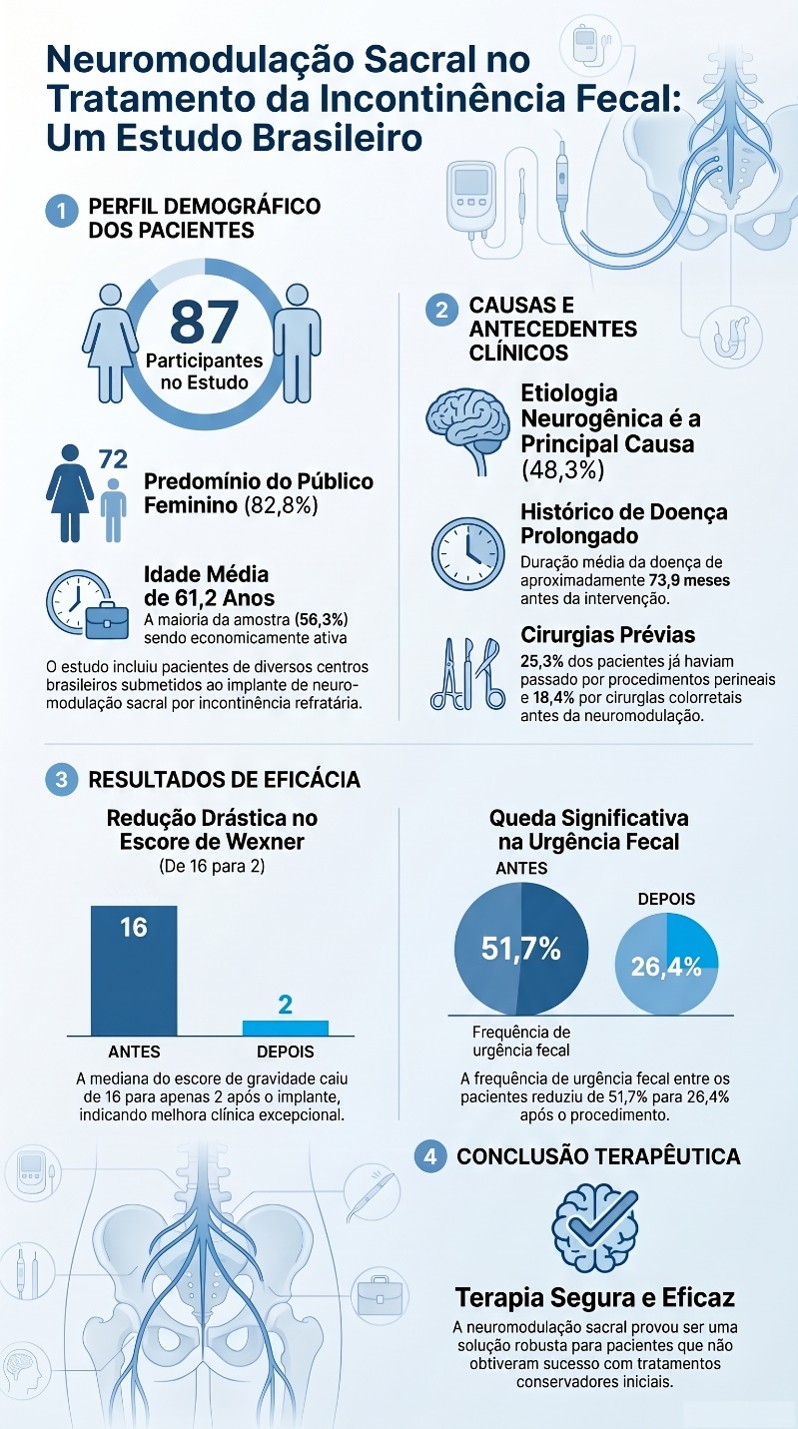
- Multicenter Brazilian real-world cohort (nine reference centers) of 87 adults with fecal incontinence undergoing sacral neuromodulation.
- Sacral neuromodulation produced a marked improvement in fecal incontinence severity (median Wexner 16 [IQR 12–17] to 2 [IQR 0–4]).
- Fecal urgency prevalence decreased substantially after implantation (51.7% to 26.4%), supporting clinically meaningful symptom relief beyond score reduction.
- Low adverse-event rate (6.9%), mainly lead infection (4.6%), consistent with an acceptable safety profile.
ABSTRACT
Background –
Fecal incontinence affects approximately 5%– 10% of non-institutionalized individuals and is associated with socioeconomic burden. A meaningful proportion of patients fail conservative management and may require interventional therapies. Sacral neuromodulation has emerged as a less invasive option with favorable outcomes in clinical practice. Objective – To describe clinical and demographic characteristics and to assess fecal incontinence severity and fecal urgency before and after sacral neuromodulation implantation in Brazilian centers. Methods – Observational study including patients who underwent sacral neuromodulation implantation for fecal incontinence refractory to conservative treatment. Clinical-demographic variables, previous treatments, surgical implantation aspects, and the Wexner fecal incontinence score before and after the procedure were collected. All patients underwent anorectal manometry. Additional examinations were performed according to clinical indication. The study was approved by the local Ethics Committee. Results – A total of 87 patients were included; 72 (82.8%) were female, with a mean age of 61.22±16.32 years. Most patients were economically active (56.3%), had completed secondary education (44.8%), and were married (60.9%). The most frequent etiology was neurogenic (42; 48.3%), with a mean disease duration of 73.9±61.33 months. Among women, 17 were nulliparous. Previous surgeries included perineal procedures in 22 (25.3%), colorectal surgery in 16 (18.4%), and pelvic surgery in 12 (13.8%). Only 12 (13.8%) patients had undergone prior surgery specifically for fecal incontinence. Additional tests included endoanal ultrasound (52.9%), colonoscopy (26.4%), electromyography (31%), and pelvic magnetic resonance imaging (2.3%). The median Wexner score decreased after implantation (16; interquartile range: 12–17 vs 2; interquartile range: 0–4), and fecal urgency frequency decreased (51.7% vs 26.4%). Conclusion – In Brazilian centers, sacral neuromodulation was associated with clinically meaningful reductions in fecal incontinence severity and fecal urgency among patients refractory to conservative treatment, with a safety profile consistent with the literature.
AUTORES
Hugo Parra de CAMARGO1 , Vanessa Foresto MACHADO1 , Rogério Serafim PARRA1 , Omar FÉRES1 , José Joaquim Ribeiro da ROCHA1 , Sthela Maria Murad REGADAS2 , Luiz Henrique Cury SAAD3 , Gilmara Pandolfo ZABOT4 , Luciana Amaral de Retamal MARZÁN5 , Marcos Antonio DAL PONTE6 , Aline Landim MANO7 , Carina Quaquio MESQUITA8 , Paulo José Pereira de Campos CARVALHO9 , Marley Ribeiro FEITOSA1
