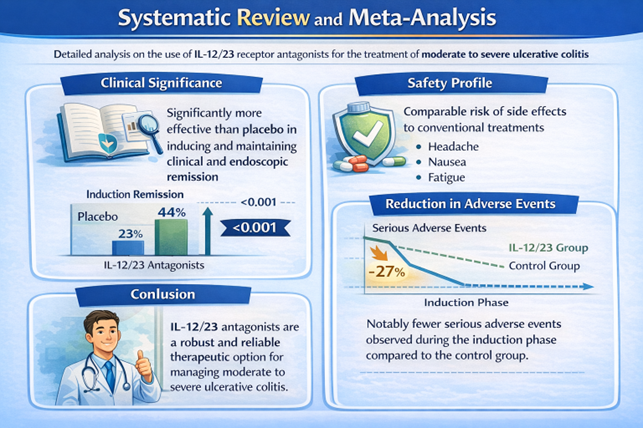
Scientific evidence suggests that selective IL-12/23 receptor antagonists are a robust and reliable therapeutic alternative for the management of this inflammatory bowel condition.
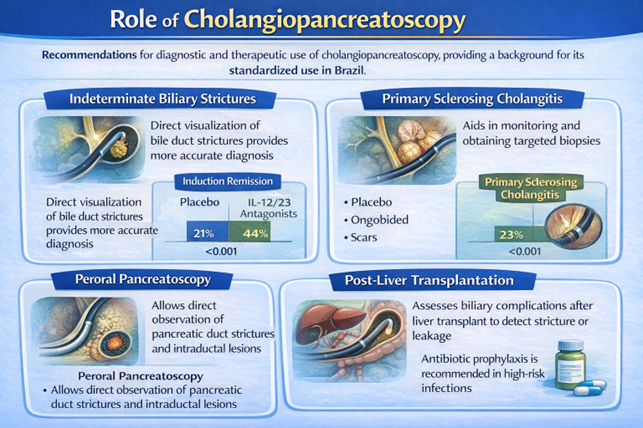
First Brazilian Consensus on Cholangiopancreatoscopy by the Brazilian Society of Digestive Endoscopy (SOBED)
Another contribution from the group of Endoscopy experts appropriate to the Brazilian reality.
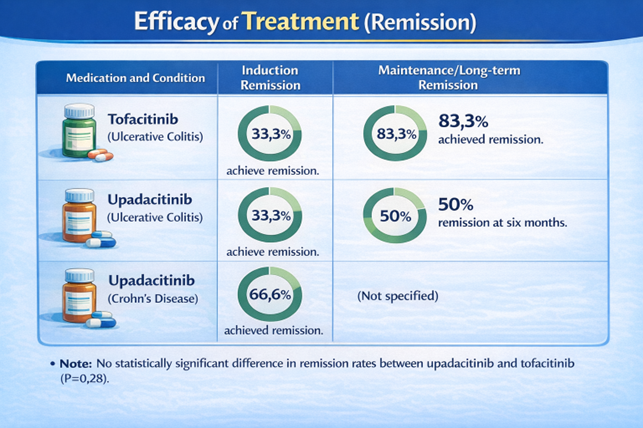
Real-World Experience With Janus Kinase Inhibitors In Extraintestinal Manifestations And Inflammatory Bowel Disease In Colombia: A Comparative Study (Jakeim-Ibd Study)
Janus kinase inhibitor (JAKi) therapy is a safe and effective alternative for the management of extraintestinal manifestations in patients with IBD.
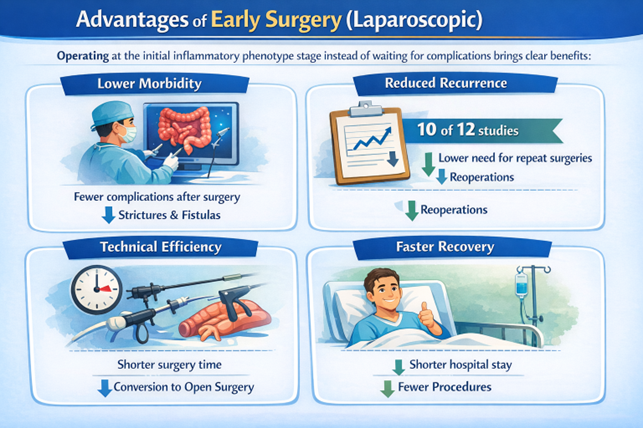
Early Ileocecal Resection In Crohn’s Disease: A Systematic Review
Performing surgery soon after diagnosis, especially laparoscopically, results in lower postoperative morbidity and significantly reduces the need for future interventions compared to late drug treatments.
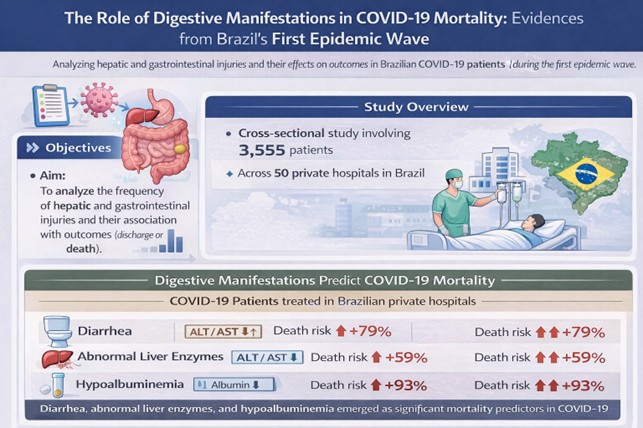
The Role of Digestive Manifestations in COVID-19 Mortality: Evidences from Brazil’s First Epidemic Wave
The COVID-19 pandemic revealed a wide range of metabolic and systemic manifestations in intensity and diversity. Understanding these grave disease indicators must be ingrained in our minds in the face of these health challenges.
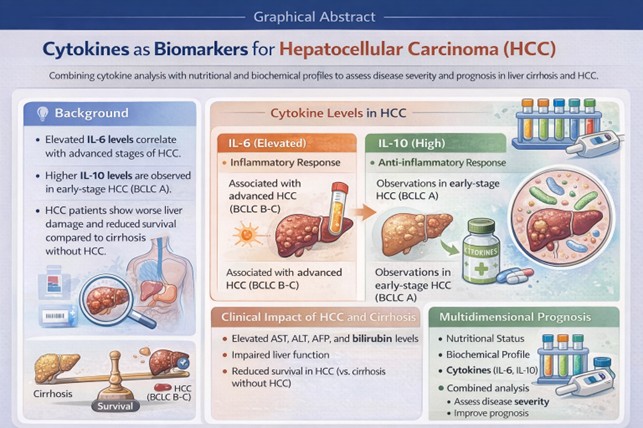
Interleukin-6 and Interleukin-10 as Biomarkers of Hepatocellular Carcinoma Progression: A Cross-Sectional Analysis of Nutritional, Cytokine and Survival Parameters
The integration of cytokine profiling with nutritional and biochemical assessment provides a more comprehensive understanding of HCC severity and prognosis.
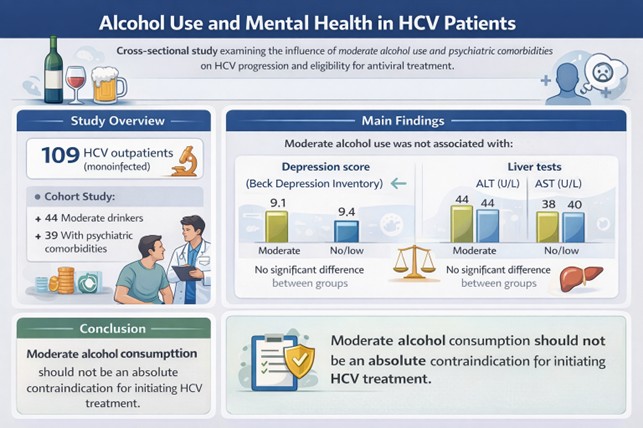
Patterns of alcohol consumption and mental health in HCV-infected patients: implications for antiviral eligibility
Antiviral treatment should not be conditioned on the desirable abstinence from alcohol, as shown in this study. The depressive symptoms that accompany alcohol dependence are part of the treatment of these patients, as hepatic aggression is linked to the persistence of alcohol intake.
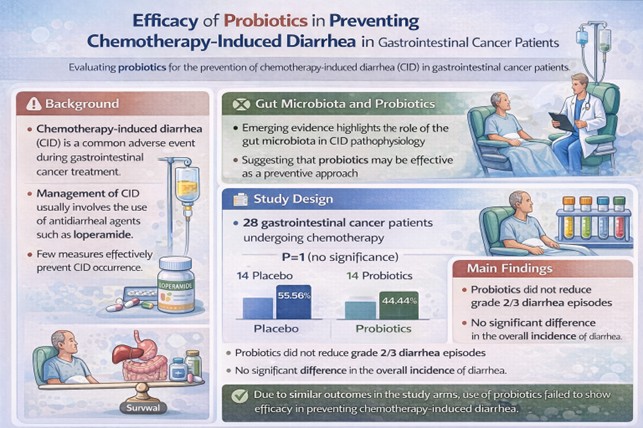
Efficacy of probiotics in preventing chemotherapy-induced diarrhea in gastrointestinal cancer patients
Unfortunately, probiotics seem to have little or no action towards preventing diarrhea in these cases. The pathophysiology of diarrhea caused by chemotherapy drugs does not depend on the alteration of the microbiota alone.
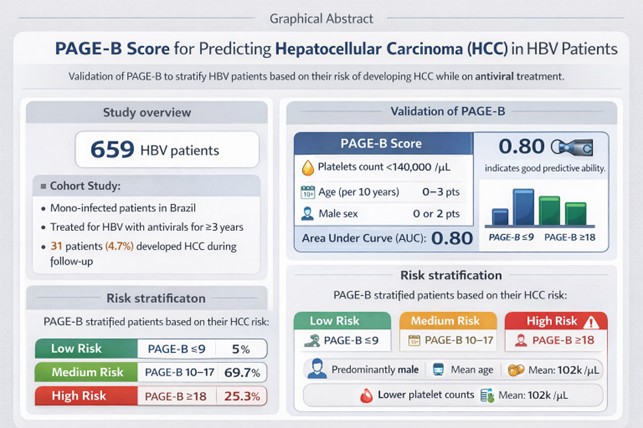
Validation of the PAGE-B score as a prognosis of development to hepatocellular carcinoma (HCC) in chronic hepatitis B, in the Brazilian population
This study provides robust real-world evidence validating the PAGE-B score as an effective and practical tool for predicting hepatocellular carcinoma risk among Brazilian patients with chronic hepatitis B receiving long-term antiviral therapy. The higher incidence of HCC observed, particularly among older male patients with thrombocytopenia and advanced fibrosis, underscores the need for region-specific risk stratification strategies. By confirming the discriminatory capacity of PAGE-B in a diverse Brazilian population and highlighting differences related to antiviral therapy, these findings support its incorporation into routine clinical practice to optimize surveillance intensity and improve early HCC detection in high-risk HBV carriers.
