
HIGHLIGHTS
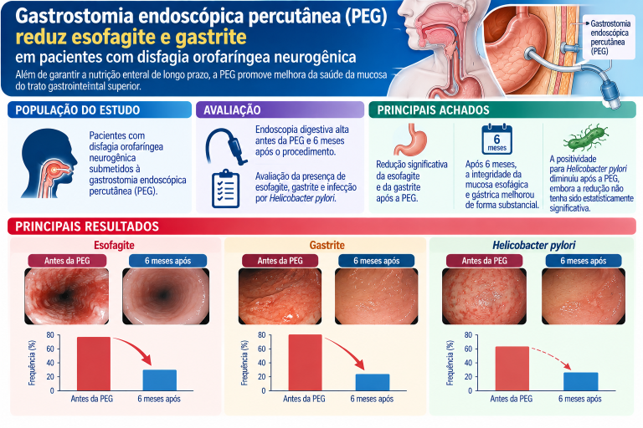
- Percutaneous endoscopic gastrostomy significantly reduced esophagitis and gastritis in patients with neurogenic oropharyngeal dysphagia.
- Six months after PEG placement, esophageal and gastric mucosal integrity improved substantially.
- Helicobacter pylori positivity decreased after PEG, although the reduction was not statistically significant.
- PEG represents a safe long-term enteral feeding strategy with additional benefits for upper gastrointestinal mucosal health.
ABSTRACT
Background –
Oropharyngeal dysphagia is frequent among individuals with neurological disorders and may impair nutrition and quality of life. Long-term nasoenteric tube use is associated with esophagitis, gastritis, and increased Helicobacter pylori, highlighting the need for safer nutritional alternatives. Percutaneous endoscopic gastrostomy (PEG) is widely used for long-term enteral feeding. Objective – To evaluate esophageal and gastric inflammatory changes and the presence of H. pylori before and 6 months after PEG placement in patients with neurogenic oropharyngeal dysphagia. Methods – In this prospective study, 42 patients (median age 76 years) underwent upper gastrointestinal endoscopy and rapid urease testing at baseline and six months after PEG placement. Esophagitis and gastritis were classified using the Los Angeles and Sydney systems. McNemar test was applied (P≤0.05). Results – Esophagitis decreased from 57% to 5% and gastritis from 52% to 10% (both P<0.001). H. pylori positivity declined from 24% to 12% (P=0.154). Conclusion –PEG was associated with significant improvement in esophageal and gastric mucosal integrity, supporting its role as a safe long-term nutritional strategy in patients with neurogenic oropharyngeal dysphagia.
AUTOR
João Paulo Galletti PILON, Rodolfo de Oliveira MEDEIROS, Paula Cristina COLA and Suely Mayumi Motonaga ONOFRI
