
HIGHLIGHTS
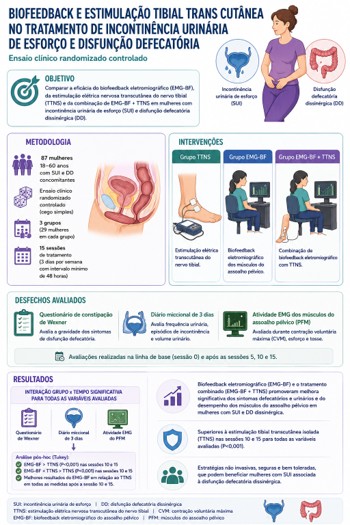
- EMG-BF, either alone or in combination with TTNS, significantly improved defecatory and urinary symptoms.
- EMG-BF, either alone or in combination with TTNS, significantly improve pelvic floor muscle activity.
- A minimum of ten treatment sessions is required to achieve clinically meaningful improvements.
ABSTRACT
Background – Objective –
To compare the efficacy of electromyography biofeedback (EMG-BF), transcutaneous tibial nerve stimulation (TTNS), and combination of EMG-BF with TTNS in women with stress urinary incontinence (SUI) and dyssynergic defecation (DD) disorders. Methods – In this single-blinded, three-arm, randomized controlled trial, eighty-seven women (18-60 years) with concurrent SUI and DD disorders randomly allocated into three groups (29 per group) including TTNS, EMG-BF and combined treatment group. Participants in each group received fifteen treatment sessions (3 day per week with at least 48-hour break between sessions). Wexner constipation scoring system questionnaire, 3-day bladder diary and EMG activity level of the pelvic floor muscle (PFM) during maximal voluntary contraction (MVC), straining, and coughing were assessed as treatment outcomes measures at baseline and immediately after sessions 5,10 and 15. Results – A two-way repeated measure analysis of variance showed that group interaction by time was significant for all measured variables. Further analysis by the Tukey post hoc test showed significant difference of Wexner questionnaire, 3-day bladder diary and EMG activity level values in the EMG-BF group compared with TTNS group (P<0.001) and in combined treatment group compared with TTNS group (P<0.001) in sessions 10 and 15. Conclusion – EMG-BF and combined treatment significantly improved defecatory and urinary related symptoms and PFM performance in women with SUI and DD disorders.
AUTOR
Neda ORAKIFAR, Fatemeh ORAKI KOOHSHOORI, Nahid PIRAYEH, Eskandar HAJIANI, Shahla ZAHEDNEJAD
