
HIGHLIGHTS
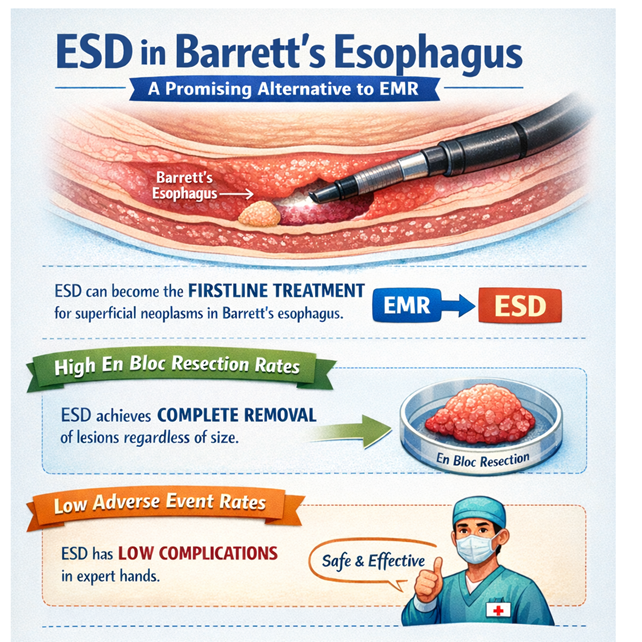
- Endoscopic submucosal dissection (ESD) in the management of superficial neoplasms associated with Barrett’s esophagus has the potential to replace endoscopic mucosal resection (EMR) as the firstline treatment for the eradication of this type of lesion.
- ESD in the management of superficial neoplasms associated with Barrett’s esophagus show high rates of en bloc resection regardless of lesion size.
- ESD in the management of superficial neoplasms associated with Barrett’s esophagus show low rates of adverse events in expert hands.
- Our study shows one of the largest audits of ESD in the management of superficial neoplasms associated with Barrett’s esophagus in Latin American centres.
ABSTRACT
Background –
The main clinical impact of superficial neoplasms associated with Barrett’s esophagus lies in their increasing oncogenic potential in the medium and long term. For this reason, the main international guidelines agree on the importance of their early eradication. However, controversy persists as to the most appropriate endoscopic resection technique either endoscopic mucosal resection or endoscopic submucosal dissection (ESD) that guarantees the best resective quality standards. Objective – This study aims to present the results of the clinical application of endoscopic submucosal dissection to manage superficial esophageal neoplasms in Barrett’s esophagus. Methods – A retrospective analysis was performed on a prospectively collected database on consecutive patients treated with ESD for superficial neoplasms associated with Barrett’s esophagus, between 2009 and 2022. The following clinical outcomes were assessed: en-bloc, complete and curative resection rates, local recurrence, adverse events and procedure-related mortality. Results – Esophageal ESD was carried out in 27 patients with a final histological diagnosis of adenocarcinoma in 55.6% and high-grade intraepithelial neoplasia in 44.4%. En bloc and complete resection rates were 96.2% and 85.1%, respectively. The curative resection rate was 77.7%. Adverse events occurred in two cases (7.4%). The mean post ESD endoscopic follow up was 22.1 months. Disease free survival rate at 2 years was 88.9%. Conclusion – ESD performed by trained endoscopists is feasible, safe and clinically effective for managing early Barrett’s esophagus neoplasm.
AUTORES
Rúbia Moresi Vianna De Oliveira , Josué Aliaga Ramos , Jonathan Richard White and Vitor Nunes Arantes
