
HIGHLIGHTS
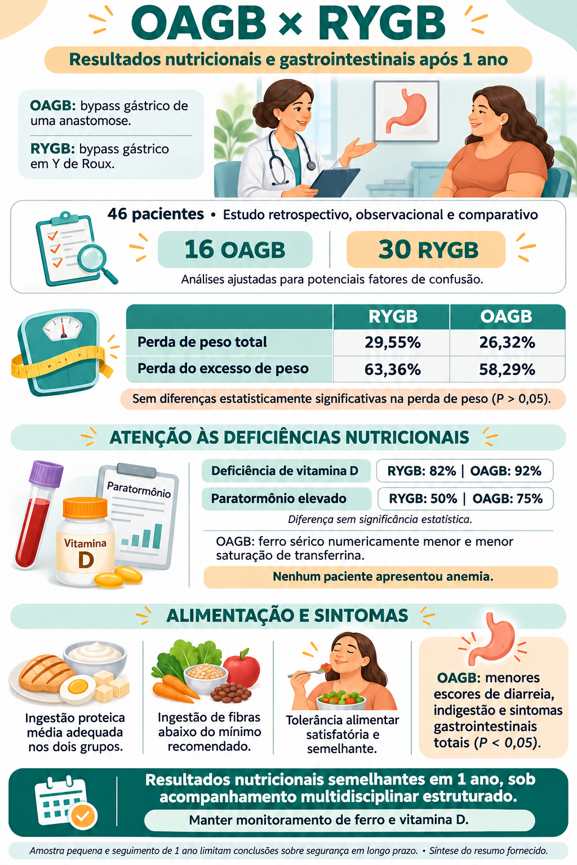
- OAGB and RYGB achieved comparable weight loss, dietary intake, and food tolerance. OAGB showed lower gastrointestinal symptom scores.
- Vitamin D deficiency was highly prevalent in both groups; elevated PTH and subclinical iron metabolism alterations were more frequent in the OAGB group.
- No clinically relevant food intolerance was observed with either surgical technique.
- Under structured multidisciplinary follow-up, OAGB is a nutritionally safe alternative to RYGB, requiring ongoing monitoring of iron and vitamin D status.
ABSTRACT
Background – Metabolic and bariatric surgery is an effective obesity treatment. One anastomosis gastric bypass (OAGB) has emerged as an alternative to Roux-en-Y gastric bypass (RYGB); however, evidence regarding its postoperative nutritional outcomes remains limited. Objective: To compare food tolerance, gastrointestinal symptoms, and nutritional status between OAGB and RYGB one year after surgery. Methods – This retrospective, observational, comparative study included 46 patients (16 OAGB and 30 RYGB). Weight loss, laboratory parameters, dietary intake, food tolerance, and gastrointestinal symptoms were evaluated one year postoperatively. Linear regression models were adjusted for relevant confounding variables, including age, sex, and baseline values when appropriate. Results – The percentage of total weight loss (29.55% vs 26.32%) and excess weight loss (63.36% vs 58.29%) were similar between RYGB and OAGB groups (P>0.05). A high prevalence of vitamin D deficiency was observed in both groups (RYGB: 82% vs. OAGB: 92%). Elevated parathyroid hormone levels were more frequent in the OAGB group (75% vs 50%), although the difference was not statistically significant. OAGB patients showed numerically lower serum iron and reduced transferrin saturation; however, none of the patients developed anemia. Mean protein intake met the recommended levels in both groups, whereas fiber intake was below the minimum recommended level. OAGB patients presented significantly lower gastrointestinal symptom scores for diarrhea, indigestion, and total score (P<0.05). Food tolerance was satisfactory and similar between groups. Conclusion – Under structured multidisciplinary follow-up, OAGB and RYGB demonstrated comparable nutritional outcomes. OAGB appears to be a nutritionally safe alternative at one year of follow-up, with the need for ongoing monitoring of iron and vitamin D status.
AUTORES
Priscilla SAMPAIO, Denis PAJECKI, Marco Aurelio SANTO FILHO, Maria Carolina Gonçalves DIAS and Marco Aurelio SANTO
