
HIGHLIGHTS
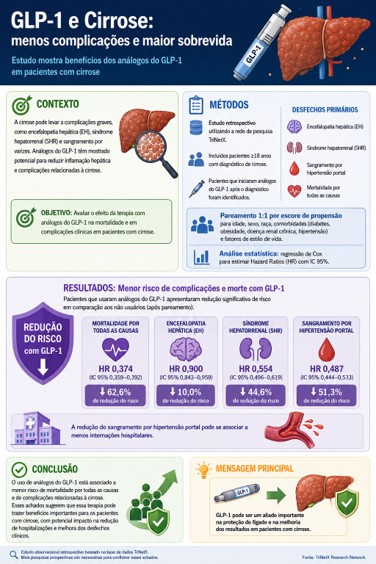
- TriNetX cohort: adults with cirrhosis initiating GLP-1 after diagnosis.
- 1:1 propensity-score matching; Cox models for mortality and complications.
- GLP-1 use linked to lower all-cause mortality (HR 0.37; 95% CI 0.36– 0.39).
- Lower hepatorenal syndrome risk (HR 0.55) and portal hypertensive bleeding (HR 0.49).
- Modest reduction in hepatic encephalopathy risk (HR 0.90).
ABSTRACT
Background –
Cirrhosis is characterized by complications, including hepatic encephalopathy (HE), hepatorenal syndrome (HRS), and acute variceal bleeding, Glucagon-like peptide–1 (GLP–1) analogs, have shown potential benefits in reducing liver inflammation and lowering cirrhosis-related complications. This study aims to provide insights into the effect of GLP–1 therapy on mortality and clinical outcomes in patients with cirrhosis. Methods – We conducted a retrospective analysis using TriNetX research network. The cohort comprised patients ≥18 years old with a diagnosis of cirrhosis. Patients who were started on GLP–1 analogs after the diagnosis of cirrhosis were identified. Primary outcomes included all–cause mortality, HE, HRS, and portal hypertensive bleeding. Variables such as age, sex, race, comorbidities (e.g., diabetes, obesity, chronic kidney disease, hypertension), and lifestyle factors underwent 1:1 propensity matching to reduce confounding. Cox proportional hazards regression analysis was utilized to analyze the matched cohorts, and hazard ratios (HR) with 95% confidence intervals. Results – GLP–1 analog use was significantly associated with a reduced risk of several cirrhosisrelated complications. Patients treated with GLP–1 analogs exhibited a significantly lower risk of all-cause mortality (HR 0.374, 95%CI 0.359– 0.392), HE (HR 0.900, 95%CI 0.843–0.959), and HRS (HR 0.554, 95%CI 0.496–0.619). Additionally, there was reduced rates of portal hypertensive bleeding among GLP–1 users (HR 0.487, 95%CI 0.444–0.533). Conclusion – This study demonstrates that GLP–1 analog use is associated with a significantly lower risk of all-cause mortality and cirrhosis-related complications. Furthermore, the reduced rate of portal hypertensive bleeding might correlate with subsequent decrease in hospitalizations.
AUTORES
Chidera N ONWUZO1, Odusanya Kikunlore ELIJAH4, FNU ALVINA1, Rashid Abdel RAZEQ3 , KOJO-FRIMPONG B. AWUAH2 , Somtochukwu ONWUZO2
