
HIGHLIGHTS
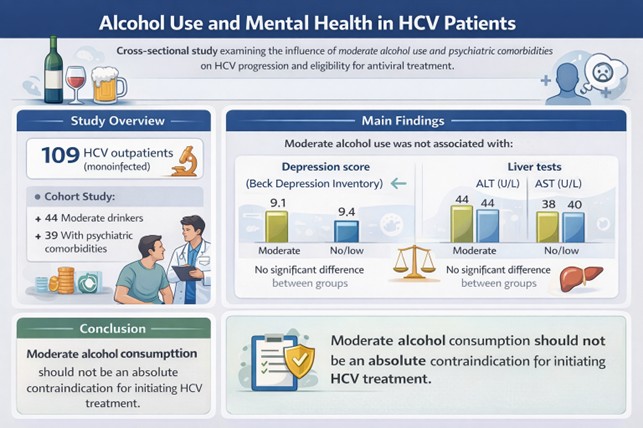
- Alcohol use and psychiatric comorbidities may influence hepatitis C virus (HCV) progression and eligibility for antiviral treatment.
- This was a cross-sectional study that included 109 monoinfected HCV outpatients.
- Moderate alcohol use in HCV-infected patients was not associated with increased depressive symptoms or worse clinical parameters.
- Moderate alcohol consumption should not be an absolute contraindication for initiating HCV treatment.
ABSTRACT
Background –
Hepatitis C virus (HCV) infection remains a significant public health concern. Behavioral factors such as alcohol use and psychiatric comorbidities, particularly depression, may influence disease progression and eligibility for antiviral treatment. Objective – To assess the prevalence and clinical impact of current alcohol consumption in patients with chronic HCV infection eligible for treatment with direct-acting antivirals (DAAs), and to explore its associations with depressive symptoms and clinical characteristics. Methods – This was a cross-sectional study including 109 monoinfected HCV outpatients. Sociodemographic, clinical, and laboratory data were collected. Current alcohol use was assessed using the alcohol, smoking and substance involvement screening test (ASSIST), and depressive symptoms were measured by the Beck Depression Inventory (BDI). Results – Among participants, 46 (43.4%) reported current alcohol consumption. No statistically significant difference in alcohol use was found between male and female participants (P=0.15). Women showed significantly higher depressive symptom scores compared to men (11.33 vs 7.67; P=0.024). However, no significant association was observed between levels of alcohol consumption (<12 g/day, ≥12 g/day, or abstinent) and the presence of moderate to severe depressive symptoms. Additionally, alcohol use was positively associated with tobacco use (P=0.01), but not with clinical comorbidities. Conclusion – Moderate alcohol use in HCV infected patients was not associated with increased depressive symptoms or worse clinical parameters prior to DAA therapy. These findings suggest that moderate alcohol consumption should not be an absolute contraindication for initiating HCV treatment, though further studies are needed.
AUTORES
Lívia Beraldo de LIMA, André MALBERGIER, Priscila Dib GONÇALVES, Suzane Kioko ONO, Anderson Sousa MARTINS-DA-SILVA, Mário Guimarães PESSOA, Mariana Akemi NABESHIMA, Maria Cassia MENDES-CORRÊA, Arthur Guerra de ANDRADE and João Maurício CASTALDELLI-MAIA